
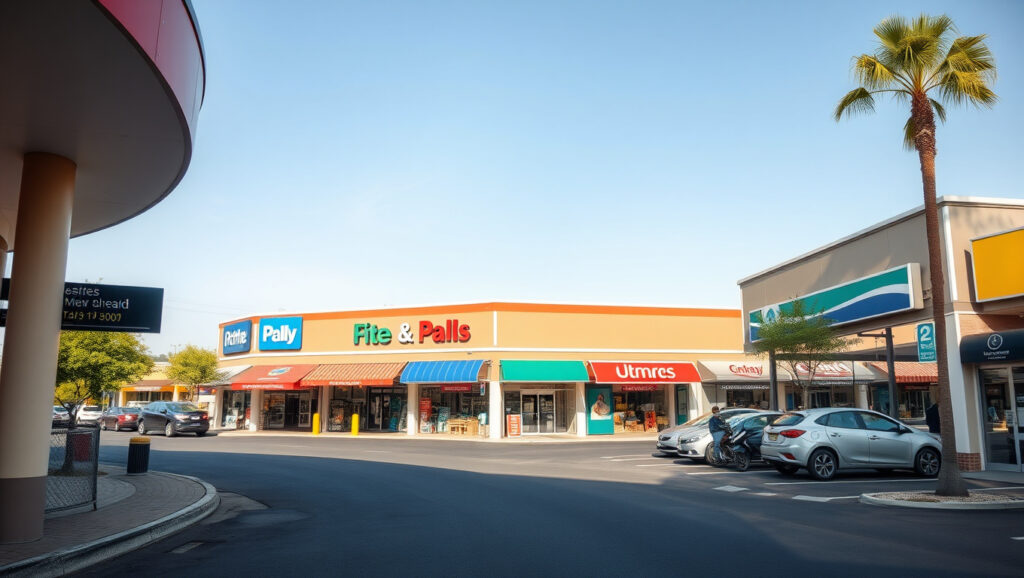

Planning a franchise investment in Gqeberha / Port Elizabeth? This resource outlines the market conditions, franchise types, capital demands, and a structured comparison of leading models including Koodo Microfinance — to help you make a well-informed decision.
Local Economic Context
Gqeberha / Port Elizabeth is a diversified metro economy anchored by manufacturing, logistics, automotive-related activity, retail, and services, with demand supported by a broad working- and middle-income consumer base. Franchise demand is shaped by a mix of industrial employment, commuter trade, and everyday household spending.
Key sectors: Automotive manufacturing and components, logistics and transport, retail trade, wholesale distribution, business services
Investor and Demographic Profile
Average household income: R15,000 – R35,000 pm
Typical investors in Gqeberha / Port Elizabeth are owner-operators and first-time franchisees looking for lower entry costs, steady local demand, and businesses that can serve both industrial workers and mass-market households. The area tends to suit practical entrepreneurs who want cash-flow businesses with manageable overheads rather than high-capex flagship stores.
The Existing Franchise Landscape in Gqeberha / Port Elizabeth
Visible franchise activity in Eastern Cape and Port Elizabeth includes low-cost, mobile, professional-services, pest-control, real-estate, restaurant, retail, and security concepts, with couriers and service franchises also actively promoting opportunities in the city. National QSR and retail chains are typically present in major shopping nodes and commuter corridors, making the market visibly competitive for consumer-facing brands.
Typical investment range in Gqeberha / Port Elizabeth: R1.5M – R6M for QSR, and roughly R500,000 – R2.5M for many retail or service franchises, depending on brand, store size, and fit-out requirements.
Franchise Ideas That May Suit Gqeberha / Port Elizabeth
The categories below are general franchise types identified as potentially suitable for this market. This is not a list of available franchise territories, and no specific brand availability is implied or guaranteed. Always conduct independent due diligence and request a Franchise Disclosure Document from any franchisor before investing.
Small-Format Quick Service Food
A King Pie-type kiosk, The Fish and Chip Co-type inline store, or a Fishaways-type takeaway may suit a regional town with limited premium QSR competition. These micro-format food concepts can operate from modest footprints and serve high-volume, price-conscious local consumers.
Capital intensity: R325,000 – R1.65M depending on format. Risks include load-shedding, limited foot traffic during off-peak periods, and seasonal variation in smaller towns. Territory availability may be better here than in major metros.
Hardware, Building Supplies and DIY Retail
A Build It-type or Mica-type hardware model may suit a regional town with active residential construction, agricultural support needs, and limited specialist competition. These models serve both individual customers and contractors.
Capital intensity: R3M – R10M. Risks include high working capital requirements for stock and the need for significant floor space. This format is capital-intensive and better suited to investors with business experience in construction or retail.
Agricultural and Agribusiness Support Services
In provinces with strong agricultural activity, franchised agribusiness support — feed distribution, crop input supply, or veterinary product retail — may serve a genuine gap in regional towns where farmer access to services is limited.
Capital intensity: varies widely. Risks include commodity price volatility and weather sensitivity. Seasonal income requires careful cash-flow management.
Educational and Skills Development Services
A tutoring or adult education franchise model may suit a regional town where government schools are under-resourced and families seek supplemental academic support. Demand is consistent across income groups for learner support in core subjects.
Capital intensity: R380,000 – R500,000. One of the most affordable franchise entry points. Risks include seasonality and reliance on school-term enrolment.
Financial Services and Credit Access
Regional towns with a salaried workforce — particularly in the public sector, mining support industries, or retail — generate consistent demand for regulated personal credit products. A microfinance model serving NCR-compliant short-term loans may suit this market.
Capital intensity: from R75,000 plus lending capital. A Koodo-type microfinance franchise addresses the structural credit gap that exists in many regional towns where formal banking branch networks are limited.
Lower-Overhead Alternative: Koodo Microfinance
For investors who cannot access the capital needed for QSR or hardware franchises, a structured microfinance model represents a materially lower barrier to entry while operating within a defined regulatory framework.
Capital intensity: from R75,000 (plus your personal lending capital). No retail lease or perishable stock required.
Franchise Comparison: Traditional Brands vs Koodo in Gqeberha / Port Elizabeth
The table below compares the typical investment profile and operational requirements of franchise types commonly found in markets similar to Gqeberha / Port Elizabeth against the Koodo microfinance franchise model.
| Business Model | Typical Capital | Premises | Staff | Demand Driver | Main Risk | How Koodo Compares |
|---|---|---|---|---|---|---|
| Small QSR / Takeaway | R325K – R1.65M | Required (inline / kiosk) | 3–8 staff | Affordable cooked meals | Load-shedding; cold chain; seasonal town traffic | R75,000; no food handling; fully digital |
| Hardware / Building Supplies | R3M – R10M+ | Required (warehouse) | 6–20 staff | Construction and agri demand | Large capex; stock financing; space dependent | No inventory; no warehouse required |
| Educational / Tutoring Services | R380K – R500K | Required (classroom space) | 2–5 staff | Learner academic support | School calendar seasonality; enrolment churn | Year-round demand; no seasonal dependence |
| Koodo Microfinance Franchise | From R75,000 + lending capital | Not required | Lean (2–3 person) | Digital-sourced credit demand | Regulatory compliance (NCR/NCA) | This is the Koodo model |
Local Questions for Gqeberha / Port Elizabeth Investors
What types of franchise businesses tend to work in Gqeberha / Port Elizabeth?
Based on the local economy — driven by Automotive manufacturing and components and related sectors — the most viable franchise categories in Gqeberha / Port Elizabeth include service-based concepts with lean overheads, QSR formats suited to the local income band of around R15,000 – R35,000 pm, and financial services addressing credit access needs. The franchise ideas section above provides a structured overview of the categories that may merit further research specific to this market.
How strong is credit demand among Gqeberha / Port Elizabeth residents?
With an average household income of approximately R15,000 – R35,000 pm, residents in Gqeberha / Port Elizabeth sit within the income band that generates consistent demand for short-term personal credit products. Salaried workers in the Automotive manufacturing and components sector typically use regulated credit to manage medical costs, school fees, and short-term cash-flow shortfalls. A microfinance franchise operating in Eastern Cape must comply with the NCR and NCA — this regulatory structure, while demanding, protects both the lender and borrower and distinguishes registered franchises from informal money-lenders.
What are the main risks of franchising in Gqeberha / Port Elizabeth?
The main risks vary by franchise type. Traditional QSR and retail franchises in Gqeberha / Port Elizabeth face challenges around load-shedding, escalating lease costs, and consumer spending sensitivity tied to local economic conditions. A lower-overhead model like Koodo reduces exposure to these specific risks, though it introduces the requirement to manage a personal loan book with appropriate risk assessment, collections processes, and NCR compliance. A low-cost R75,000 microfinance franchise would appeal in Gqeberha / Port Elizabeth because it lowers the capital barrier for entrepreneurs who want to enter a proven business without the overhead of a restaurant or large retail site. Demand is likely strongest in price-sensitive communities and working-class commercial areas where accessible financial services can outperform high-rent consumer franchises.
Frequently Asked Questions About Koodo Franchising
What does the R75,000 setup fee cover?
The once-off R75,000 setup fee grants you access to our proven microfinance operating system, comprehensive training, compliance frameworks, and integration into our digital marketing lead-generation engine. Note that this fee does not include your actual lending capital.
Who provides the capital for the loans?
As a Koodo franchisee, you are responsible for providing your own lending book capital. Because you fund the loans, you retain the yield, allowing you to scale your returns directly in proportion to the capital you deploy into the market.
Do I need to lease a premium retail storefront?
No. Unlike traditional fast-food or retail franchises that require expensive mall space and heavy foot traffic, a Koodo microfinance business is a low-overhead model. It can be operated from a modest commercial office or even as a secure home-based business, depending on your local strategy.
How do I find clients for my loan book?
You do not need to rely on walk-in traffic. Koodo utilises centralised digital marketing and automated client sourcing to generate highly targeted leads, driving prospective clients directly to your franchise.
Do I need prior experience in banking or accounting?
While financial literacy is important, you do not need a formal background in banking. Our 12-year track record has allowed us to build robust, easy-to-follow operational processes. We provide the systems, software, and training necessary to manage risk and run the business effectively.
Own a Koodo Microfinance Franchise in Gqeberha / Port Elizabeth
Koodo Microfinance offers a proven franchise model with a minimum investment of R75 000. As a regulated financial services franchise in South Africa, Koodo gives you the systems, training, and brand recognition of a franchise — without the capital burden of traditional retail or food franchise brands.
Local Commercial Landscape
The commercial footprint of Gqeberha / Port Elizabeth is heavily concentrated along Govan Mbeki Avenue, anchored by high-volume retailers like Shoprite. For a consumer-facing microfinance branch, transit proximity is critical. The primary Baywest Mall Taxi Rank (Entrance 2) sits roughly 0.2km from Baywest Mall, creating a highly walkable retail corridor where daily commuters naturally transition into immediate foot traffic.
Ready to franchise in Gqeberha / Port Elizabeth?
The Koodo Microfinance franchise is available across South Africa from R75,000 — full training, NCR compliance support, and a proven digital lead model included. View the full Koodo Franchise Opportunity →